Visit > Plan your visit
Whakaritea tō toronga
Plan your visit
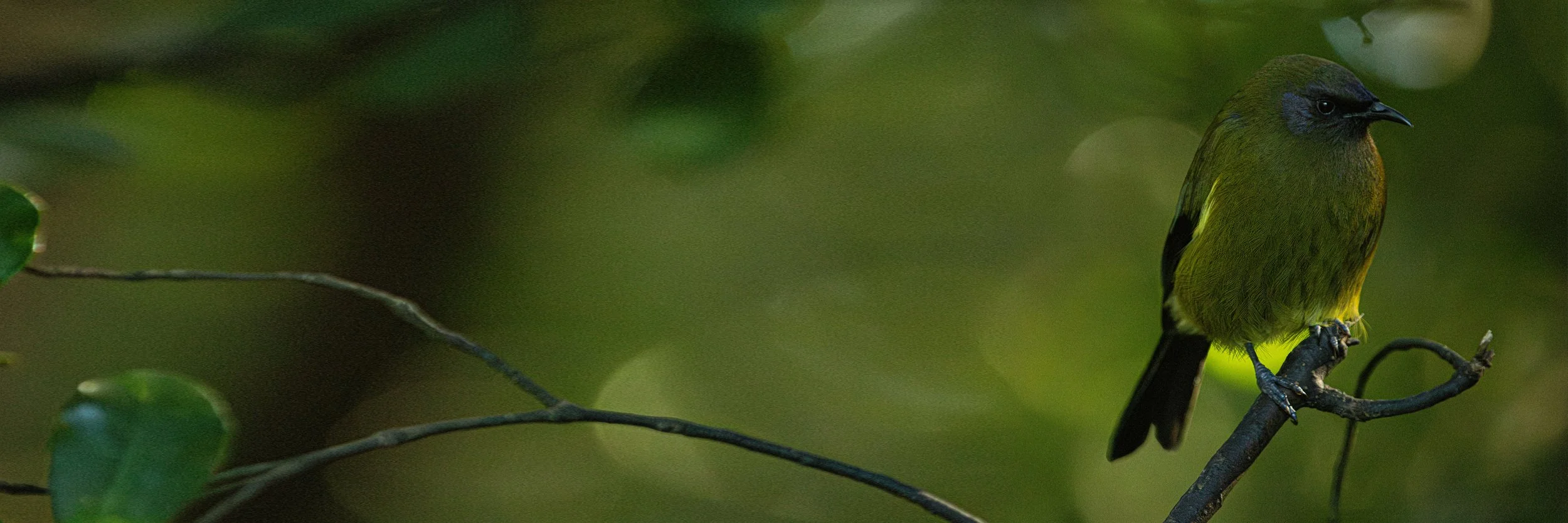
Korimako | Bellbird.
Photo by Shaun Lee. stet.co.nz
Experience the dramatic landscapes, native wildlife, and rich natural heritage of Te Whara and the Bream Head Scenic Reserve. Whether you are visiting for a short walk, a challenging hike, birdwatching adventure, or simply to reconnect with nature, we encourage everyone to explore this remarkable part of Whangarei Heads responsibly and respectfully.
Discover Te Whara/Bream Head
Te Whara/Bream Head is one of Northland’s most significant ecological and cultural landscapes, home to regenerating native forest, rare wildlife, rugged coastal views, and important conservation work led by the Bream Head Te Whara Conservation Trust and its partners.
The Te Whara/Bream Head area is significant to Ngatiwai, Ngati Kahu, Te Waiariki and Te Parawhau and other local and more distant iwi/hapu, particularly those descended from the Ngaitahuhu Tribe, who used to occupy the Whangarei area, and the ancestor Manaia who settled at Whangarei Heads.
Visitors can enjoy:
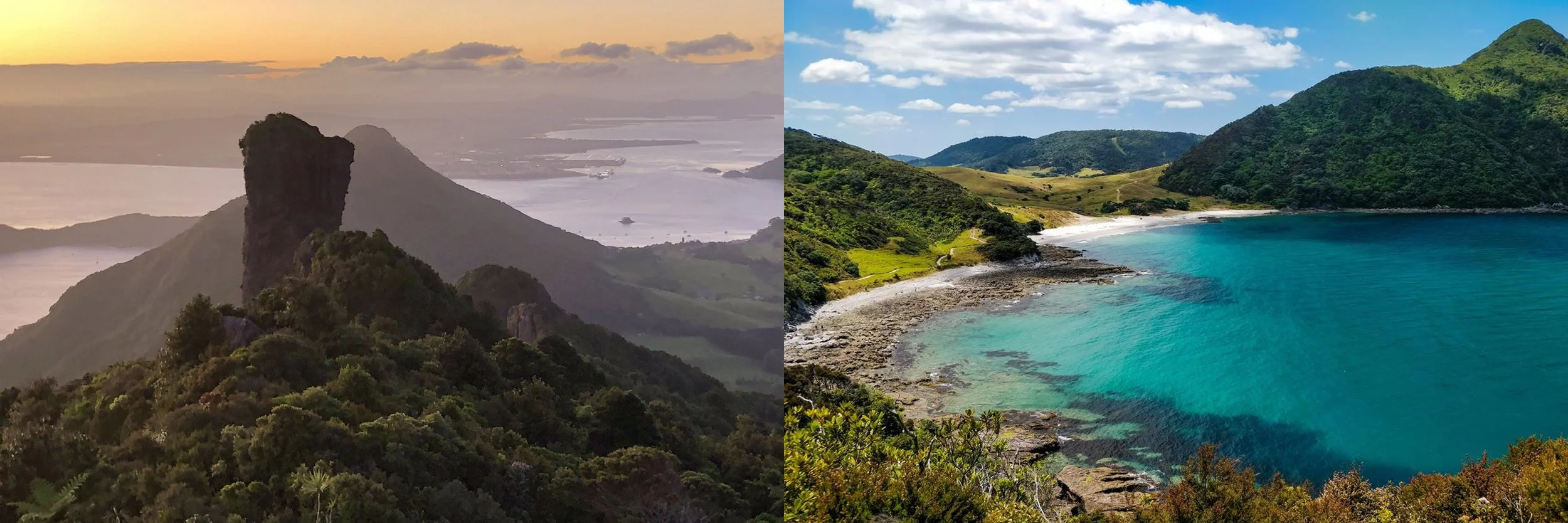
Spectacular walking tracks and panoramic coastal views
Native birds and wildlife in a protected environment
Ancient forest remnants and regenerating ecosystems
Scenic beaches, bays, and rocky headlands
A chance to experience conservation in action
Walking tracks
The area offers a range of walks and hikes suitable for different fitness levels.
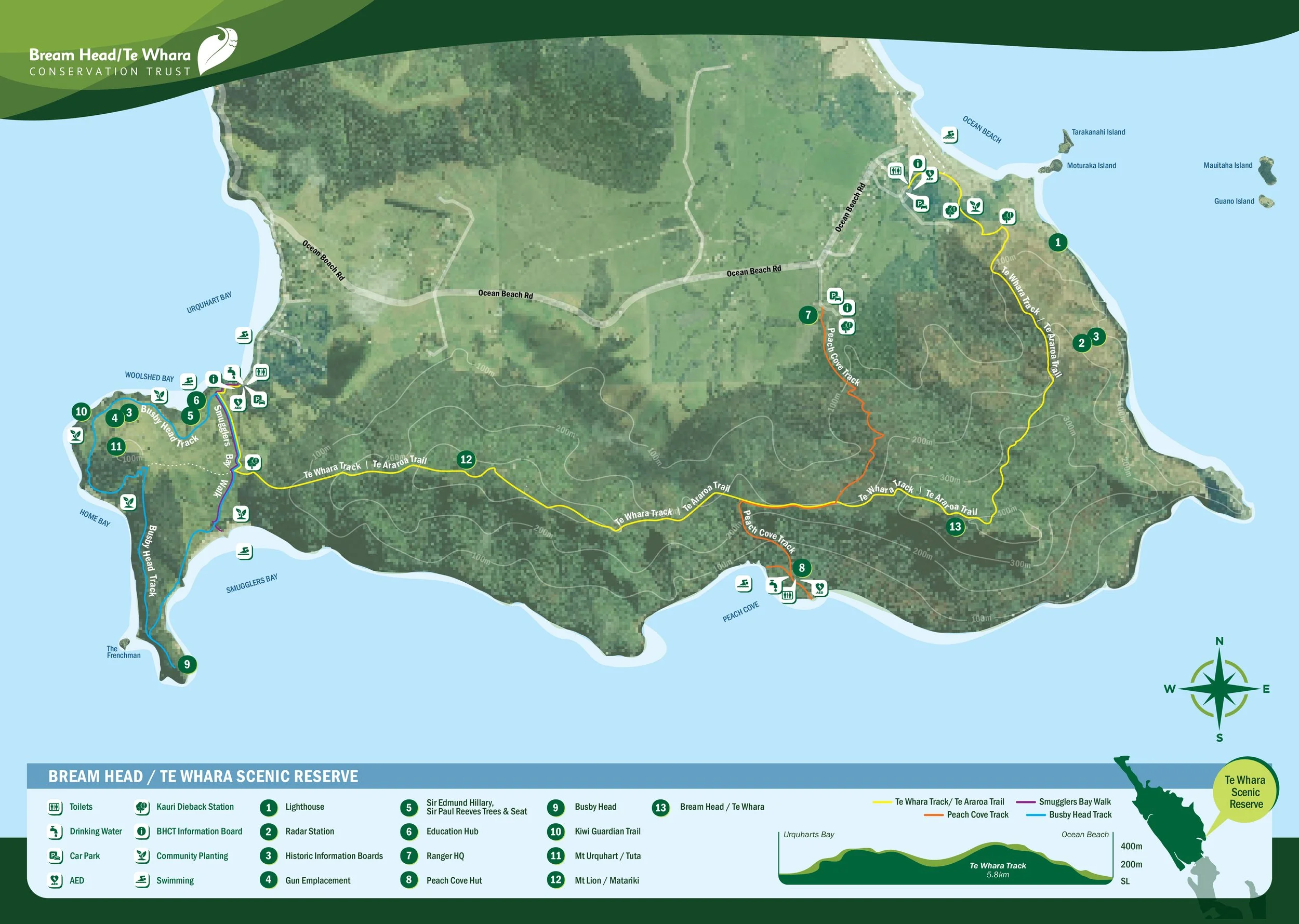
Te Whara Track / Te Araroa Trail
A challenging ridgeline hike with incredible views across the Whangarei coastline, ocean, and offshore islands.
Smugglers Bay Track
A popular walk leading to the stunning Smugglers Bay beach.
Peach Cove Track
A scenic coastal track leading to Peach Cove Hut and beach.
Mt Lion Track
A shorter walk with rewarding panoramic views over Whangarei Heads.
Please check track conditions and weather before heading out, and allow plenty of time for your visit.
What to bring
Conditions can change quickly in coastal and forest environments. We recommend bringing:
Sturdy walking shoes or hiking boots
Drinking water
Sun protection and a hat
Weather-appropriate clothing
Snacks or food for longer walks
A fully charged phone
Rubbish bags to take all waste home
Protect this special place
Visitors play an important role in helping protect Te Whara’s unique environment.
Please:
Stay on marked tracks
Respect wildlife and nesting areas
Keep dogs under control and follow local restrictions (No dogs are allowed within the Bream Head Scenic Reserve)
Do not disturb traplines or monitoring equipment
Take all rubbish with you
Help prevent the spread of pests and plant diseases by cleaning footwear before and after walks
Conservation in action
As you explore the reserve, you may see evidence of ongoing conservation work including predator traps, pest plant control, native planting, and monitoring projects. These efforts are helping restore native biodiversity and protect vulnerable species throughout the landscape.
The support of volunteers, local communities, iwi, and visitors is vital to the long-term success of this work.
Safety information
Weather conditions can change rapidly
Some tracks are steep, exposed, and physically demanding
Mobile coverage may be limited in some areas
Always let someone know your plans before heading out
Avoid entering closed or restricted conservation areas
In an emergency, call 111.
Support conservation
By visiting respectfully and supporting local conservation efforts, you are helping protect Te Whara for future generations.
You can support the work of the Bream Head Te Whara Conservation Trust by:
Volunteering
Donating
Attending community events
Sharing conservation awareness
Practising responsible recreation while visiting the reserve
Thank you for helping care for this extraordinary landscape.
Download Te Whara/Bream Head Scenic Reserve Map (PDF, 16.4 MB)